



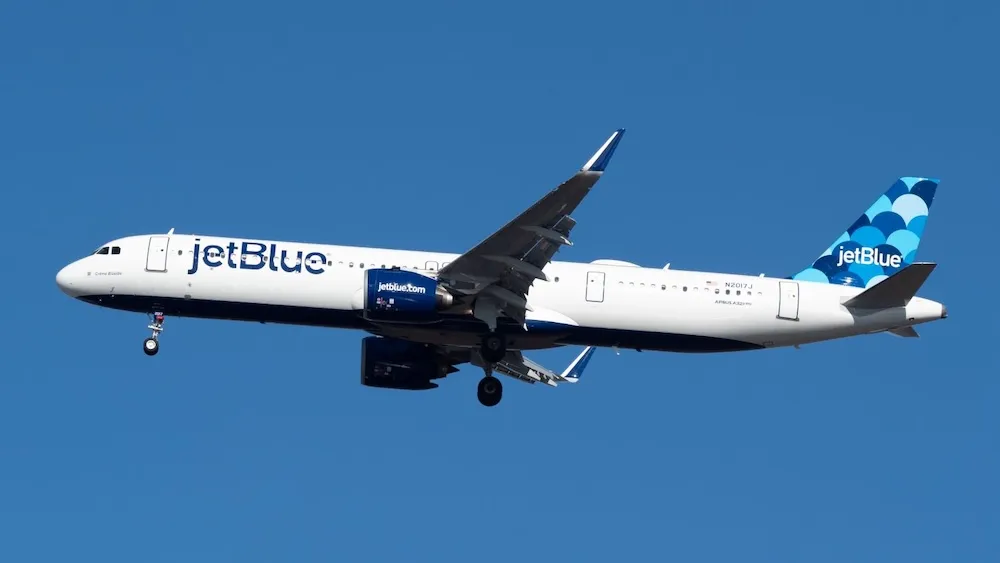


If you've been stacking up JetBlue TrueBlue points through flights, the JetBlue credit card, or everyday spending, you've probably wondered: what are these actually worth? The answer depends on how and when you use them — and in 2026, the landscape has changed significantly thanks to new airline partnerships and expanded redemption options.
This guide covers everything you need to know about JetBlue TrueBlue points value 2026 — from average cents-per-point rates to the game-changing Blue Sky JetBlue United partnership, how to get the most from your balance, and what to do if you'd rather convert your points to cash.
How Much Are JetBlue TrueBlue Points Worth in 2026?
JetBlue TrueBlue points are generally worth around 1.3 to 1.5 cents per point, making a balance of 50,000 points worth approximately $650 to $750 in travel value. That said, the actual value you get depends heavily on which flights you book and whether you're redeeming strategically.
Unlike some loyalty programs that use a fixed award chart, TrueBlue uses a dynamic pricing model. This means the number of points required for a flight fluctuates based on the cash price of the ticket. In practical terms, a higher-priced flight costs more points, and a sale fare costs fewer. This makes TrueBlue one of the more transparent programs to use — but it also means there are no "hidden sweet spots" where points go dramatically further than their face value.
For most domestic redemptions, you can expect to get between 1.3 and 1.5 cents per point. For premium Mint class redemptions on transatlantic or transcontinental routes, the value can sometimes push above 1.5 cents per point, especially when cash prices are elevated and you're booking during peak periods.
When selling TrueBlue points for cash through a trusted broker, the going market rate in 2026 is approximately 1.1 to 1.4 cents per point — a reliable return for a balance you're not planning to use for travel.
JetBlue TrueBlue Points Value vs. Other Loyalty Programs
To put JetBlue TrueBlue points value 2026 in context, it's worth comparing the program to its closest competitors. TrueBlue sits solidly in the mid-tier range of U.S. airline loyalty programs.
Delta SkyMiles average around 1.0 to 1.3 cents per mile, largely due to aggressive dynamic pricing and the disappearance of a fixed award chart. United MileagePlus miles tend to come in at 1.1 to 1.6 cents, with higher values unlocked through partner awards. American AAdvantage miles hover around 1.0 to 1.5 cents. Southwest Rapid Rewards points are consistently around 1.4 to 1.5 cents per point, making them one of TrueBlue's closest competitors in terms of value.
What JetBlue lacks in international partner footprint, it increasingly makes up for in domestic network strength and, now, through the expanding Blue Sky JetBlue United partnership — which is reshaping how TrueBlue points can be used in 2026.
The Blue Sky JetBlue United Partnership Explained
One of the most significant developments for TrueBlue members in recent years is the Blue Sky JetBlue United partnership. Announced in May 2025 and launched in phases starting in October 2025, Blue Sky is a collaboration between JetBlue and United Airlines that fundamentally expands how loyalty members can earn and redeem points across both networks.
Here is what the partnership means for TrueBlue members right now:
In the first phase, launched in October 2025, TrueBlue members could begin earning and redeeming points on United-operated flights, and United MileagePlus members could do the same on JetBlue flights. This reciprocal earning and redemption model gave TrueBlue members instant access to United's far larger international and domestic network — something JetBlue's standalone operation could never offer on its own.
In February 2026, the partnership reached its next milestone. JetBlue and United opened up cross-airline bookings, meaning travelers can now purchase eligible itineraries on either airline directly through JetBlue.com, United.com, or both carriers' mobile apps. You can book with cash or with points, giving TrueBlue members the flexibility to use their balance across a much wider range of routes.
Later in spring 2026, reciprocal elite benefits are set to arrive, including priority boarding, preferred seating, extra legroom access, and same-day flight changes for Mosaic and United Premier status holders when flying on either airline.
For TrueBlue members, the practical impact is significant. Points that were once limited to JetBlue's routes can now be used to access United's global network. JetBlue TrueBlue members earn 5 points per dollar spent on United flights — slightly below the 6 points per dollar earned on JetBlue-operated flights, but a meaningful addition to what was previously a domestic-only earning structure.
The Blue Sky JetBlue United partnership is still rolling out. Further phases, including United's planned return to JetBlue's JFK hub by 2027, are expected to deepen the collaboration further. For anyone holding a TrueBlue balance today, this partnership represents a genuine increase in how much flexibility those points can deliver.
TrueBlue Points: No Expiration — But That Doesn't Mean They're Immune to Devaluation
One of TrueBlue's most appealing features is its no-expiration policy. JetBlue TrueBlue points never expire, regardless of account activity. You don't need to make a purchase every 12 or 24 months to keep your balance alive, which removes the time pressure that affects members of programs like Alaska Mileage Plan or British Airways Avios.
This is a genuine advantage, particularly for occasional travelers who accumulate points slowly. It also means there's no urgency to sell or redeem simply to avoid losing your balance to inactivity.
However, no-expiration does not mean no-risk. Airline loyalty programs regularly devalue their points — meaning the same number of points buys fewer flights over time. JetBlue's dynamic pricing model means that as cash ticket prices rise, the number of points required for the same seat rises with them. The result is an invisible erosion of value that happens gradually, often without any formal announcement.
The lesson: don't mistake "points don't expire" for "points hold their value forever." A large, idle TrueBlue balance is still slowly losing purchasing power year over year. If you have more points than you'll realistically use in the next 12 to 24 months, it's worth considering whether selling for cash today makes more sense than waiting for a trip that may never materialize.
How to Maximize JetBlue TrueBlue Points Value in 2026
Getting the most out of your TrueBlue balance comes down to a few core strategies, all of which are more relevant now that the Blue Sky JetBlue United partnership has expanded the earning and redemption landscape.
The first strategy is to book during TrueBlue Fare Sales. JetBlue regularly runs point sales on select routes, where the number of points required drops significantly while cash prices stay the same. Booking during these windows can push your effective cents-per-point value well above the average 1.3 to 1.5 cent range.
The second is to target JetBlue Mint redemptions when cash prices are high. Mint is JetBlue's premium cabin, available on transcontinental routes between New York and Los Angeles or San Francisco, as well as transatlantic routes between New York and London. When Mint cash fares are elevated — often during peak travel periods — redeeming points can deliver well above 1.5 cents per point in value.
The third strategy, newly relevant in 2026, is to leverage the Blue Sky JetBlue United partnership for access to United routes. As a TrueBlue member, you can now earn toward your balance on United flights and use TrueBlue points for United-operated itineraries that were previously out of reach. This is especially useful for TrueBlue loyalists who occasionally need to fly routes that JetBlue doesn't serve directly.
Finally, if you're holding a large balance you're unlikely to use within the next year, consider getting a cash quote. The Miles Market provides free, no-obligation quotes for TrueBlue balances, and current market rates mean a meaningful payout on unused points.
When to Sell Your JetBlue TrueBlue Points
Selling your TrueBlue points makes sense in a few specific situations.
If you have accumulated far more points than your near-term travel plans require, the excess is idle value at risk of slow devaluation. Selling that surplus converts it into cash you can use immediately rather than leaving it subject to future program changes.
If your travel patterns have shifted — for example, you now fly United or another carrier more frequently thanks to the Blue Sky partnership, and your TrueBlue balance is no longer your primary loyalty currency — selling your existing balance and consolidating into one program can simplify your points strategy significantly.
And if you simply want guaranteed cash rather than having to hunt for award availability, good redemption windows, or navigate partner booking systems, selling is a clean and fast alternative.
Through The Miles Market, selling JetBlue TrueBlue points is a straightforward three-step process. You request a free quote, receive a competitive offer within minutes, and get paid within 24 hours of accepting. The Miles Market has completed over 70,000 transactions with a Trustpilot rating of 4.8 out of 5, and their team searches the market to ensure you're getting the best available rate for your balance.
Are JetBlue TrueBlue Points Worth Keeping in 2026?
JetBlue TrueBlue is a strong, straightforward loyalty program. The points don't expire, the earning structure is simple, and the Blue Sky JetBlue United partnership has meaningfully expanded what TrueBlue members can do with their balance in 2026. For regular JetBlue flyers with near-term travel plans, there's plenty of value to unlock — especially through Mint redemptions and the growing United network.
That said, JetBlue TrueBlue points value 2026 is best realized when points are used actively. Dynamic pricing means that large, idle balances quietly lose value over time as ticket prices fluctuate and the program evolves. The no-expiration policy is a safety net, not a reason to wait indefinitely.
If you're sitting on a substantial TrueBlue balance you don't have plans for, The Miles Market can give you a competitive cash offer today. It takes minutes to get a quote, and payment arrives within 24 hours — no booking windows, no award availability stress, just cash in hand.


