 Contact Us
How the Iran war is disrupting air travel, and what flyers should do with their miles now

 5 min
5 min


Since its start on February 28, 2026, the war in Iran quickly expanded beyond the country with a wave of retaliatory attacks across the Gulf, creating within hours a global aviation disruption. Eight countries simultaneously closed their airspace, including some of the most important aviation corridors.
Dubai International Airport - the world’s busiest international hub - was struck and evacuated. Qatar’s Hamad International Airport emptied. Thousands of flights were cancelled overnight. Tourists and frequent flyers who’d carefully planned itineraries, sometimes saving miles and money for years, found themselves stranded, rebooked, or just left with no answers faced with an uncertain future for their trip and their loyalty points.
If you’re a frequent flyer with miles tied up in Emirates Skywards, Qatar Avios, or any Middle East-linked program, here’s what’s happening, what it means for your miles, and what you should do right now.
What happened: a hole in the sky
The scale of this disruption is unprecedented in the modern era. At the peak of the crisis, airspace closures covered Iran, Iraq, Israel, Jordan, Qatar, Bahrain, Kuwait, and the UAE - all at the same time. Syria had already been partially closed for years, but the February 28 escalation sealed it entirely.
The consequences weren’t limited to the region. The Middle East is the geographic spine of long-haul aviation. Hundreds of daily flights connecting Europe to Asia, Africa to North America, and the Indian subcontinent to the Americas route directly through Gulf hubs. When those hubs go offline, the entire global flight map has to be redrawn.
Airlines that had planes or crew stationed in the region found themselves unable to operate routes on the other side of the world. A jet that was supposed to pick up passengers in Singapore may have been sitting idle on a tarmac in Dubai. The cascading effect was global - literally felt on six continents, according to aviation analyst Henry Harteveldt.
By early March, more than 12,000 flights had been cancelled since the start of the conflict, with thousands more experiencing delays or rerouting.
Emirates, Qatar Airways & Etihad: the hardest hit
No carriers have been more affected than the three Gulf megacarriers: Emirates (Dubai), Qatar Airways (Doha), and Etihad Airways (Abu Dhabi).
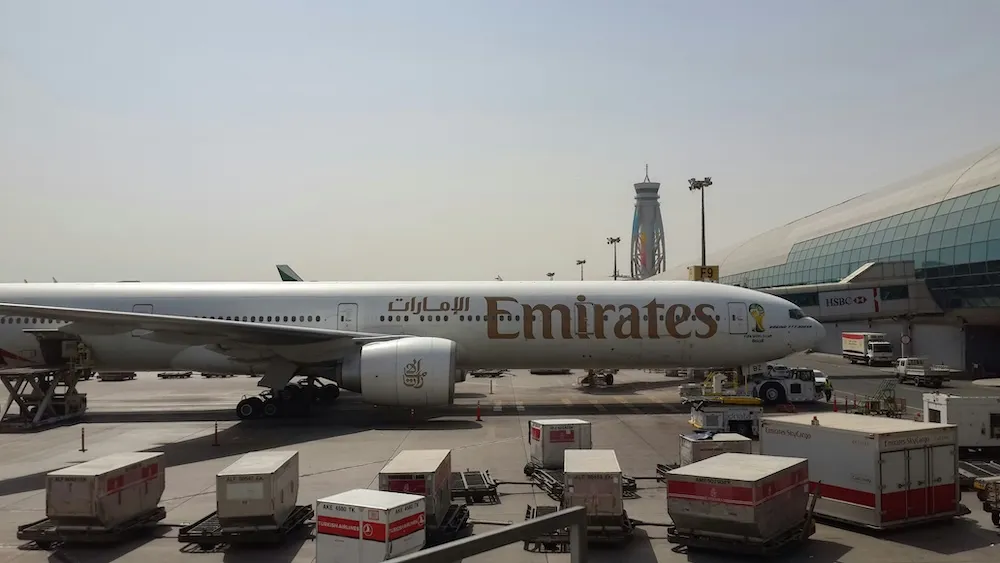
Emirates suspended all flights for several days, telling passengers with bookings prior to March 5 to rebook or request refunds. Its home base, Dubai International Airport, was directly struck by Iranian drones - forcing a full airport evacuation. Emirates operates one of the world’s largest international networks, and its grounding created a ripple effect for millions of connecting passengers across Asia, Africa, Europe, and beyond.
Qatar Airways’ entire operation halted when Qatari airspace was closed. Hamad International Airport in Doha - one of the most-transited airports on earth for Europe-Asia travel - recorded over 2,000 cancellations by the end of the first week. Qatar only began operating limited relief flights out of Muscat and Riyadh to help stranded passengers.
Etihad followed a similar path, extending its suspension before gradually resuming a “limited commercial schedule” as conditions began to stabilize.
As of early March, airlines began cautiously reopening certain routes through restricted corridors - but with significant uncertainty about what comes next.
What this means for your miles and points
This is the question every frequent flyer is asking right now: what happens to my miles if this drags on?
Here’s the breakdown:
Your miles don’t disappear - at least not immediately. Emirates Skywards miles, Qatar Avios, and Etihad Guest points remain in your account regardless of the conflict. Airline loyalty programs are among the last things carriers shut down.
But your planned redemptions may be in limbo. If you had an award booking on a cancelled Emirates or Qatar flight, you’re entitled to a refund of your miles. Most carriers have been explicit about this - but the process can take weeks, and you’ll need to proactively request it.
The bigger risk is long-term devaluation. Conflicts of this scale strain airline balance sheets. When airlines face existential financial pressure, loyalty program devaluations often follow - quietly, with little notice. Emirates devalued Skywards in the past during periods of financial stress. If the conflict persists and fuel costs rise (longer rerouted flights burn dramatically more fuel), another round of devaluations becomes more likely.
Redemption availability is shrinking. With fewer flights operating and surging demand for those that are, award seat availability has dropped sharply on Gulf carrier routes. If you’ve been sitting on miles hoping to book that business class flight to the Maldives or Bangkok, you may find fewer options in the coming months.
Long-term devaluation and reduced redemption is why thousands of frequent flyers are using this opportunity to sell their air miles for cash.The Miles Market is the world’s leading airline miles buyer, with over 70,000 transactions globally.
Reroutes, fuel surcharges, and rising costs
For flights that are operating, the disruption is adding seriously damaging costs for airlines - and those costs flow to passengers.
Airlines are now paying more “overflight fees” as they navigate longer paths through open airspace - going around closed regions adds thousands of miles to certain routes. Longer routes mean more fuel burn. Aviation consultants have already warned that if the conflict continues, fuel surcharges will likely rise on tickets and, in some cases, on award redemptions as well.
Some airline programs already charge fuel surcharges on award tickets - this is why booking with certain partner miles (like using Aeroplan miles on a Star Alliance carrier) can be strategically smarter than booking directly through a carrier’s own program during a period of cost pressure.
What frequent flyers should do right now
1. Check your pending award bookings. If you have an upcoming redemption on Emirates, Qatar Airways, or Etihad, verify its status directly through the airline’s app or website. Don’t rely solely on email notifications, some passengers have reported delays in cancellation communication.
2. Request miles reinstatement proactively. If your award flight was cancelled, contact the airline directly and request your miles and any fees be reinstated. Document everything. Backlogs are high right now.
3. Consider diversifying your miles portfolio. Heavy concentration in a single Gulf carrier program is a risk in situations like this. Programs like American AAdvantage, United MileagePlus, or Air Canada Aeroplan offer broad partner redemption options that are less exposed to any single regional disruption. If you would like to buy airline miles, The Miles Market is currently offering the best rate on the market, through its secure mileage broker platform.
4. Think about whether now is the right time to sell. If you’re holding a large balance of Emirates or Qatar miles that you’re not planning to use soon, and you’re rightfully worried about devaluation risk, this may be the right moment to evaluate their current market value. Miles, like any asset, can lose value quickly when the issuing airline faces structural headwinds.
5. Watch for new redemption sweet spots. Disruption creates opportunity. As Gulf carriers try to rebuild load factors post-conflict, they may release more premium award availability on certain routes. Experienced points collectors who stay patient could find unexpected openings in the months ahead.
The bigger picture for frequent flyers
This conflict is a stark reminder of something frequent flyers should always keep in mind: airline miles are a depreciating, non-guaranteed asset. In crisis times such as these, having miles sit idly on your account is a risk, one the airline could easily take advantage of.
The best frequent flyer strategy has always been to earn miles quickly and use them faster. Hold them long-term only when you have a specific, near-term redemption goal in mind. The events of February and March 2026 are a dramatic example of why.
Whether you’re looking to redeem what you have before uncertainty deepens, or considering selling miles you’ve accumulated in a program that now feels riskier - understanding the current landscape is the first step.
Get Paid Today
Check How Much Your Airline Miles Are Worth