 Contact Us
Booking Award Flights With Infants and Children: Airline Rules Compared for 2026


 9 min.


If your baby is under two, you can usually bring them along as a lap infant for free on domestic flights and for a reduced fare on international ones. But here’s the part that catches most parents off guard: your adult award ticket does not automatically include your lap infant. In almost every program, you book the adult seat first, then contact the airline separately to add the infant, and the price and process depend entirely on which loyalty program you used and which airline is actually operating the flight.
I’ll be using my experience untangling infant and child award bookings for The Miles Market’s clients to give you the insights on how booking award flights with infants and children works. And unfortunately, booking the infant seat is usually the headache.
How infant and child award tickets work
Before we get into the airline-by-airline detail, it helps to know the categories, because airlines treat each one differently.
Lap infant under two. Your child doesn’t get their own seat. They ride on your lap for the entire flight. Most programs charge either a percentage of the adult fare, a flat fee, or nothing at all for domestic travel. A ticket is still required, even though there’s no seat attached to it.
Child under two occupying a seat. Some parents prefer to buy a full seat and bring an FAA-approved car seat on board. If you do this, you’re generally paying the same price as an adult ticket, whether that’s in miles or cash.
Child aged two or older. Once your child turns two, the lap-infant option disappears. They need their own seat and their own ticket, priced the same as an adult in most programs, with a small number of exceptions (Flying Blue’s discounted award pricing for children is the standout one, and I’ll cover that below).
Unaccompanied minor. Not relevant to infant travel, but worth flagging: this is a different booking category entirely, with its own fees and paperwork, and it doesn’t apply until a child is old enough to fly without an adult (typically five or older, depending on the airline).
Domestic versus international. This is the single biggest factor in what you’ll pay. Nearly every program treats domestic lap infants as free (you still have to add them to the reservation, but there’s no fare). International lap infants are where the fees appear, and where they range from a few dollars in taxes to genuinely painful percentages of a business-class fare.
Airline-operated versus partner-operated awards. This is where the real complexity lives, and I’ll walk through it in detail further down. The short version: the program that issued your adult award may not be the program that can add your infant, especially when you’re flying a partner airline.
One more thing worth stating plainly: your child’s age is determined by their age on the date of travel, not the date you book. If your child turns two between booking and departure, the lap-infant window has closed by the time you fly, even if they were under two when you made the reservation.
Lap-infant pricing by program: the 2026 comparison
Here’s how the major programs compare right now. I’ve used the clearest pricing rule available for each one, but airline policy changes without much warning, so treat this as your starting point, not your final word before you transfer points.
| Program | Lap-infant price | Miles or cash? | How to add infant | Child account required? | Partner-award rules | Main warning |
|---|---|---|---|---|---|---|
| American AAdvantage Miles | Free domestic; 10% of adult cash fare international | Cash (paid separately) | Online for US domestic; call for international | No | Airline operating the flight generally must add the infant | Book the adult award first, then call for international routes |
| United MileagePlus Miles | Free domestic (and US–Canada, Mexico–US/Canada); capped at $20–$250 international | Cash, flat-rate | Online or by phone | No | United no longer charges a percentage on partner awards; flat fee applies | The old “10% of a $10,000 business fare” trap is largely gone, but always confirm the current cap for your route |
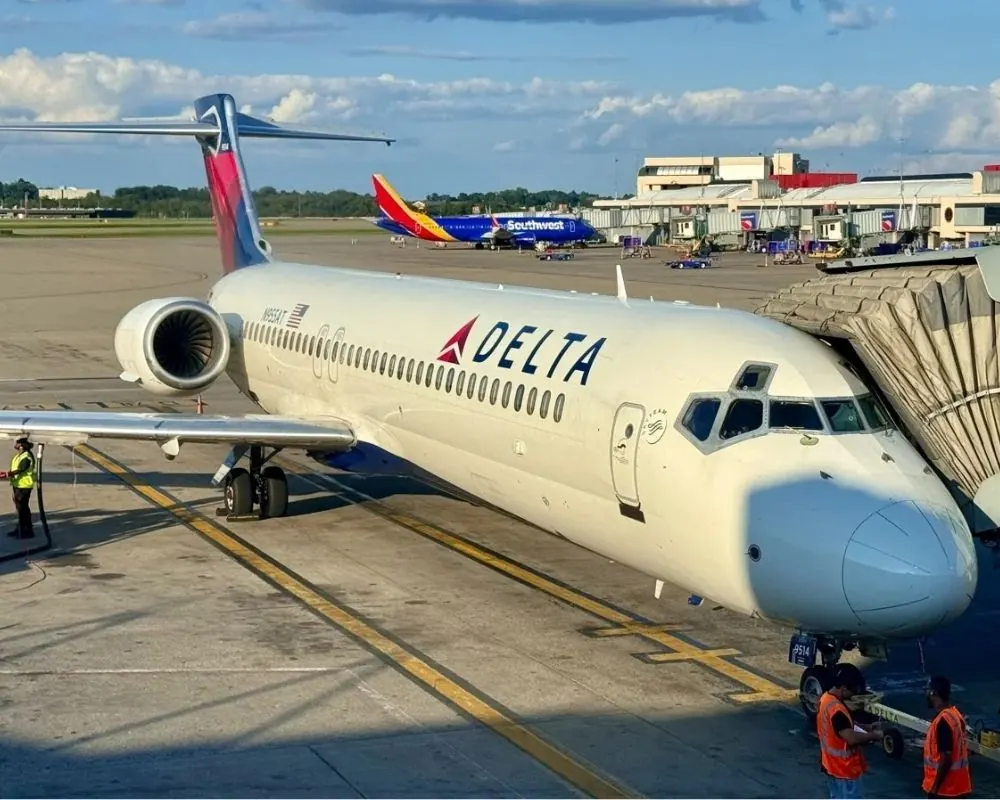
| Delta SkyMiles | Free domestic; 10% of adult fare international | Cash | Online under My Trips for most itineraries, or by phone | No, but a SkyMiles number can be added if the child has a purchased seat | SkyTeam partner bookings can require a phone call and longer processing | Agents have reported award-ticket additions taking longer than revenue tickets at the airport, so don’t leave this for departure day |
| Alaska Mileage Plan | Free on Alaska-operated domestic; 10% of adult fare on Alaska-operated international | Cash | By phone in most cases | No | Alaska’s published policy does not support lap-infant additions on partner-operated award bookings | If you’re using Alaska miles for a partner airline, don’t assume you can add a lap infant at all — confirm before transferring points |
| Air Canada Aeroplan Miles | Flat CAD 25 or 2,500 points each way, all cabins, all partners | Either | Online alongside the adult booking, or by phone after the baby is born | No | Same flat fee applies to Star Alliance and other Aeroplan partner awards | Free between Canada and the US; the flat fee applies everywhere else |
| Air France-KLM Flying Blue | 10% of adult cash fare | Cash | Online for Flying Blue-operated awards | No | Flying Blue does not support adding a lap infant to an award ticketed on a partner airline | Separately, Flying Blue Family offers a 25% discount on award tickets for children aged 2–11, which is unusual among these programs |
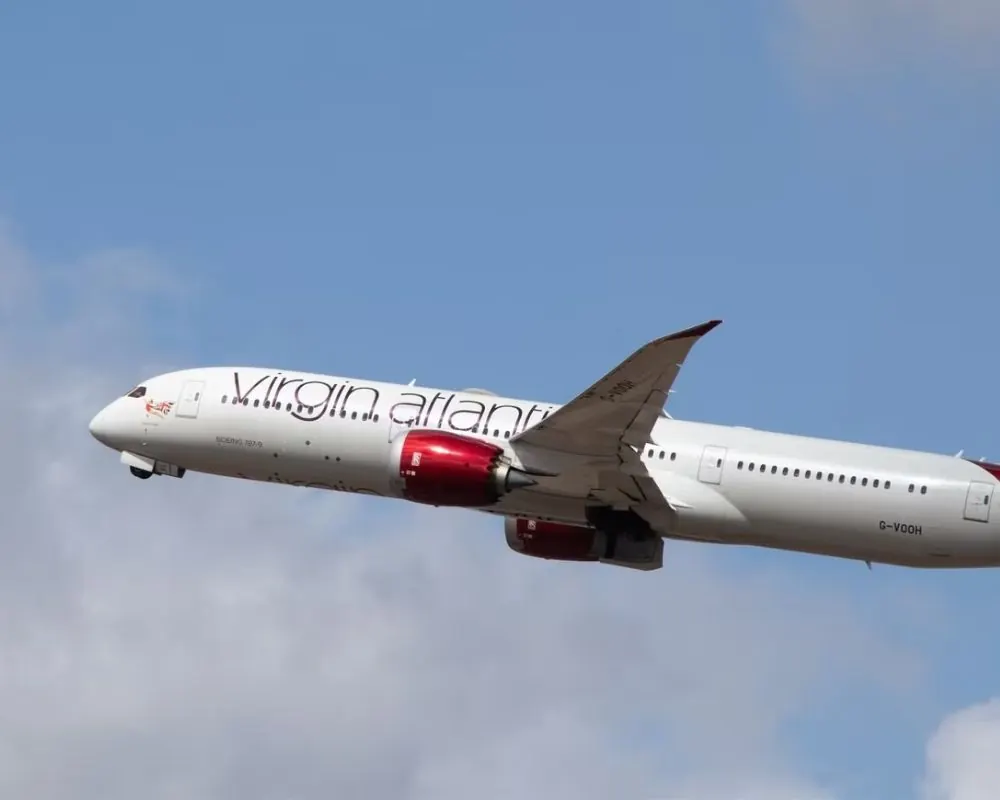
| Virgin Atlantic Flying Club | Own metal: 1,000 miles/sector Economy, 2,000 Premium Economy, 5,000 Upper Class, plus taxes. Partner-operated: varies by partner, e.g. Delta 1,000 Economy/5,000 Delta One, ANA 2,000 Economy/10,000 Business/14,000 First, Air New Zealand and Singapore 2,000 Economy/10,000 premium cabins | Miles, flat rate per sector | Online alongside adult booking for many partners | No | Flat per-sector mileage fee that resets by partner rather than one blanket Virgin rate; always check the specific partner’s fee, not just the Virgin own-metal chart | Taxes and carrier-imposed surcharges are passed through in addition to the mileage fee, so confirm the all-in total before booking |
| British Airways Executive Club | 10% of the adult mileage price | Miles | Varies by route | No | 10% of miles, not 10% of cash, which is meaningfully cheaper on a premium redemption | Still worth comparing against Aeroplan or Virgin before committing, especially for business class |
| Qatar Airways Privilege Club | 10% of adult miles in economy; business and first class generally not bookable for lap infants | Miles | Limited online support; often requires a call | No | Confirmed reports of parents unable to book infants in premium cabins on Qatar at all | If you’re planning a premium redemption with an infant, verify seat availability for the infant category before transferring points, not after |
| Emirates Skywards Miles | 10% of adult miles in economy; 10% of adult cash fare in business and first | Miles (economy) / cash (premium) | By phone | No | The jump from a miles-based fee in economy to a cash-based fee in premium cabins is the single most expensive trap in this table | Get an exact quote before booking premium cabin Emirates awards with an infant |
| Avianca LifeMiles | No published flat fee or percentage rule; LifeMiles does not have a stated lap-infant pricing structure for partner-operated awards | Not applicable | By phone; multiple parents report the addition being refused outright on partner bookings | No | LifeMiles has no confirmed mechanism for adding a lap infant to a partner-operated award, as opposed to charging a high fee for it | Do not transfer points into LifeMiles for a trip that depends on adding a lap infant until you’ve gotten written confirmation from LifeMiles directly |
| Singapore Airlines KrisFlyer | 10% of adult cash fare | Cash | By phone in most cases | No | Standard percentage-based partner rules apply | On a premium cabin redemption, this can be one of the more expensive options on this list |
Rates and rules verified against airline and independent industry sources as of August 17, 2026. Airlines change infant fee structures without much notice, so confirm current pricing directly with the airline before transferring points for any booking.
Airline comparison: what to expect from each program
American AAdvantage
American’s lap-infant fee is genuinely simple to understand once you know the split: free on domestic flights, 10% of the adult cash fare on international ones. You can add a lap infant online if your entire itinerary is within the US, including Puerto Rico and the US Virgin Islands. For anything international, plan to call.
The order matters here. Book and ticket the adult award first, then call American to add the infant. If you try to add the infant before the adult ticket has fully processed, agents have reported delays and confusion, particularly on partner-operated segments.
Should the adult award be ticketed first? Yes, especially for international itineraries.
Does the child need their own AAdvantage account? No.
Who adds the infant on a partner award? This depends on the operating carrier. American can’t always add an infant to a partner-operated flight if American doesn’t sell that partner’s premium cabins directly, which has tripped up parents booking first or business class on a partner like Qantas.
What if the infant turns two mid-trip? The relevant age is the age on each flight date. If your child turns two between the outbound and return, the return leg needs to be booked as a full ticket, not a lap infant.
Example: A parent books a New York–Rome business-class AAdvantage award. The adult ticket issues first. The parent then calls American to add the infant, and is quoted 10% of the current cash business-class fare for that route, plus applicable taxes. If the flight was American-operated the whole way, this is usually a same-day phone call. If a leg is operated by a partner, expect the agent to transfer or route the request differently.
United MileagePlus
United made a real improvement here that a lot of families haven’t caught up on yet: lap infants on international awards are no longer priced as a percentage of the fare. Instead, United caps the international lap-infant fee at $20–$250, depending on route and cabin, and domestic lap infants (plus US–Canada and Mexico–US/Canada routes) remain free aside from taxes.
This matters most on premium cabin redemptions. Under the old percentage-based model, a lap infant on a $5,000 business-class fare could cost $500. Under the current cap, the most you’d pay is $250.
Can the infant be booked online? Yes, in most cases, alongside or shortly after the adult booking.
Does the child need a MileagePlus account? No.
Who adds the infant on a partner award? United’s flat-fee cap generally applies to Star Alliance partner awards booked through MileagePlus, which is one of the more parent-friendly setups in this comparison.
Example: A family books a Newark–Frankfurt Star Alliance business-class award through MileagePlus. Under the current cap, the lap infant costs no more than $250 regardless of the cash value of that seat, a significant saving compared to a percentage-based program on the same route.
Delta SkyMiles
Delta’s structure will feel familiar: free domestic, roughly 10% of the adult fare internationally. You can usually add a lap infant online through My Trips, but several parents booking award tickets specifically have reported the online tool struggling with award reservations, requiring a phone call to finish the job.
Should the adult award be ticketed first? Yes.
Does the child need a SkyMiles account? Not for a lap infant. If you’re booking a full seat for a child two or older, opening a SkyMiles account for them lets them start earning miles on that ticket.
Who adds the infant on a partner award? SkyTeam partner bookings (Air France, KLM, Virgin Atlantic among them) can complicate this. If you’re using SkyMiles for a partner-operated flight, confirm with Delta directly whether they or the partner airline handles the infant addition.
Common booking failure: Gate agents have reported award-ticket infant additions taking meaningfully longer to process than revenue-ticket ones. Don’t plan to sort this out at check-in if you can avoid it. Call ahead.
Example: A parent flying Delta One from Atlanta to Amsterdam adds a lap infant by phone after the adult award tickets. The agent quotes roughly 10% of the current Delta One cash fare for that route, plus the standard taxes that apply to lap infants on this itinerary.
Alaska Airlines / Atmos Rewards
Alaska’s own-metal policy is competitive: free lap infants on Alaska-operated domestic flights, 10% of the adult fare on Alaska-operated international routes. The complication is entirely about partner awards.
The main warning for Alaska/Atmos: published policy does not support adding a lap infant to an award booked on a partner airline. If you’re using Alaska or Atmos miles to book a Cathay Pacific, Qatar, or other partner flight, don’t assume the infant addition will be possible through Alaska. Some parents have had success contacting the operating partner directly, but this isn’t guaranteed and isn’t Alaska’s stated policy.
Should the adult award be ticketed first? Yes, and confirm the infant-addition process with Alaska before you commit points to a partner redemption.
Who adds the infant on a partner award? Often nobody, through Alaska. This is the single clearest reason to double-check before transferring points into Alaska/Atmos for an international partner redemption involving a lap infant.
Example: A parent transfers points into Alaska Mileage Plan to book a Cathay Pacific first-class award for a family trip. When they call to add the lap infant, Alaska is unable to process it because they don’t sell Cathay’s premium cabin space directly. The parent ends up negotiating the infant fare with Cathay Pacific separately, at the operating carrier’s own rate.
Air Canada Aeroplan
Aeroplan is, without much competition, the easiest and cheapest program on this list for lap infants. The fee is a flat CAD 25 or 2,500 Aeroplan points, one-way, in every cabin, on Air Canada or any Star Alliance and other Aeroplan partner. Flights between Canada and the US are free of charge entirely.
Can the infant be booked online? Yes, alongside the adult ticket during search and booking.
Should the adult award be ticketed first? Not required. Some parents book the adult award before the baby is even born and add the infant by phone once they have a name and date of birth.
Does the child need an Aeroplan account? No.
Who adds the infant on a partner award? Aeroplan itself, at the same flat fee, regardless of which partner is operating the flight. This is what makes Aeroplan stand out: the flat rate travels with the booking rather than resetting to a percentage on partner metal.
Example: A parent books a Star Alliance business-class award from Toronto to Tokyo through Aeroplan. Adding the lap infant costs CAD 25, or 2,500 points, regardless of the fact that the same seat would cost hundreds of dollars in infant fees through a percentage-based program.
Air France-KLM Flying Blue
Flying Blue’s lap-infant fee follows the common 10%-of-cash-fare structure, and it only applies cleanly to Flying Blue-operated awards. Flying Blue does not support adding a lap infant to an award ticketed on a partner airline, which rules it out for a lot of the creative partner-award routing that makes Flying Blue popular in the first place.
Where Flying Blue does stand out is for children aged two and up: Flying Blue Family offers a 25% discount on award tickets for kids 2–11, in any cabin, on non-promotional award space. That’s a real saving if you’re booking multiple seated children rather than a lap infant.
Should the adult award be ticketed first? Yes.
Does the child need a Flying Blue account? For the Family discount to apply, the child generally needs to be part of a linked Flying Blue Family pool.
Who adds the infant on a partner award? Nobody, through Flying Blue, if it’s a lap infant on a partner-operated flight. Booking directly with the operating partner or using a different program is the workaround.
Example: A family flying Air France from Paris to New York books the adult award through Flying Blue, adds the lap infant for 10% of the cash fare, and separately books their five-year-old’s seat at 25% off standard award pricing through Flying Blue Family.
Virgin Atlantic Flying Club
Virgin is the other standout program alongside Aeroplan for infant travel, particularly because its flat, per-sector mileage fee holds up well even in premium cabins. On Virgin’s own flights, the fee is 1,000 miles per sector in Economy, 2,000 in Premium Economy, 5,000 in Upper Class, plus applicable taxes. On partner-operated flights, the fee resets to that partner’s own schedule rather than Virgin’s own-metal chart. For example, Delta runs 1,000 miles Economy and 5,000 Delta One, while ANA runs 2,000 Economy, 10,000 Business and 14,000 First.
Can the infant be booked online? For many Virgin-operated and close partner bookings, yes, alongside the adult ticket.
Who adds the infant on a partner award? Rates vary by partner, and Virgin publishes a specific per-sector mileage fee for each one rather than applying a single blanket rate. Even so, every partner schedule is a flat mileage fee rather than a percentage of cash fare, which is what makes Virgin competitive against percentage-based programs like Flying Blue or SkyMiles on the exact same partner flight.
Main warning: Virgin passes through carrier-imposed surcharges on award tickets, including for the infant. On a partner with high fuel surcharges, the “flat fee” can still come with a meaningful cash component. Always ask for the full breakdown before booking.
Example: A parent uses Virgin points to book a Delta One award from Minneapolis to Amsterdam. The adult ticket prices at a modest points total, and the lap infant adds a small increment of points rather than 10% of a multi-thousand-dollar business fare, which is what the same seat would have cost through Delta’s own SkyMiles pricing.
What happens when only one premium award seat opens?
This is one of the most common questions TMM gets from parents booking premium cabins, and the honest answer is: it depends on the airline’s age rules, and none of the options are without some risk.
Booking the premium seat while continuing to search. If only one business-class award seat shows for your dates, you can book it for the traveling adult and keep searching for a second seat, either in the same cabin or a different one. This buys you flexibility without losing the seat you’ve already secured.
Placing the adult and child on separate reservations. Some families split a booking into two reservations, one for the parent and infant in business, one for a second adult in economy on the same flight. This is possible on many airlines, but it means two separate PNRs, two separate sets of change and cancellation rules, and no guarantee the airline treats them as linked if there’s a schedule change.
Linking separate reservations. Airlines can sometimes link two PNRs so agents can see the family is traveling together, which helps at check-in and during irregular operations. Linking is not the same as one protected reservation, though. If one reservation is affected by a schedule change or cancellation, the other doesn’t automatically move with it.
Splitting an existing reservation. If you originally booked everyone in economy and a business seat opens up later, some airlines allow you to split one traveler out of the group reservation into the new cabin. This is airline and fare-rule dependent, and not universally supported.
Can an adult travel in business while the child travels in economy? Age rules vary sharply here. Many airlines require infants and very young children to be seated with an adult, which can rule this out entirely for a lap infant. Older children may have more flexibility, but you should confirm the airline’s specific age threshold before assuming this is an option.
The real risk: during a cancellation or missed connection, two separate reservations can get rebooked onto different flights, especially under pressure at the airport. If your child is a lap infant, they cannot travel unaccompanied under any circumstance, so a separate rebooking isn’t just inconvenient, it can strand your itinerary entirely. This is exactly the kind of scenario where a booking agent who can hold both reservations together and intervene during an irregular-ops event earns their fee.
Partner awards create additional complications
This is the part of infant award booking that causes the most confusion, because there are actually three different airlines potentially involved in a single itinerary, and each one has a different role.
The loyalty program issuing the award is whose miles you’re spending. The airline issuing the ticket is whose name is on the ticket stock, which is often but not always the same as the loyalty program. The airline operating the flight is who actually flies the plane, and who typically has the final say on infant policy for that specific flight.
The problem is that the program issuing the award may not have the ability to add an infant at all, while the operating airline may insist the adult ticket is issued first before they’ll even discuss it. A few concrete examples from the table above:
American miles for a Qatar or Etihad flight. American can only add an infant to a partner-operated segment if American itself sells that partner’s cabin of service. If they can’t, you may need to negotiate directly with the operating partner, sometimes for a very different fee than American would have charged.
Alaska or Atmos points for a partner flight. As covered above, Alaska’s stated policy doesn’t support lap-infant additions on partner awards at all. This is worth confirming before you transfer any points in for this specific purpose.
Flying Blue miles for a SkyTeam partner. Flying Blue does not support infant additions on partner-ticketed awards, full stop. If your plan involves Flying Blue miles and a lap infant on a non-Air France/KLM partner, expect to hit a wall.
United miles for a Star Alliance partner. This is one of the better-behaved combinations. United’s flat-fee cap generally extends to Star Alliance partner bookings, which removes a lot of the guesswork.
Virgin points for a partner-operated flight. Virgin’s flat per-sector mileage fee varies by which partner you’re flying, but it’s consistently structured rather than left to the operating carrier’s own percentage rule, which is why Virgin comes up so often as the workaround program for infant travel on Delta, KLM, ANA, and similar partners.
The pattern across all of these: the program with the best own-metal infant policy is not always the best choice once a partner airline is involved. Confirming the partner-award infant rule before you transfer points is not optional if a lap infant is part of the itinerary.
Before transferring points, confirm these details
I think you could all agree: better spend twenty minutes on this checklist than find out at the airport that the infant can’t be added.
- Confirm the adult award is genuinely bookable, not phantom availability that disappears when you try to ticket it
- Confirm the exact infant or child price for your specific route and cabin, not a general program rule
- Confirm which airline, the issuing program or the operating carrier, is responsible for adding the infant
- Check whether the infant can be added after the adult ticket is issued, or whether it needs to happen at the same time
- Confirm names and dates of birth match the documents you’ll be traveling with, especially passports for international travel
- Check whether a loyalty account or nominee arrangement is required for the child
- Confirm cancellation and change rules, and whether they apply the same way to the infant’s ticket as the adult’s
- Verify there are enough award seats for every passenger who needs one, not just the adults
- Don’t transfer points into a program until you understand its lap-infant process for your specific routing
When professional award-booking help makes sense
Most of the time, a straightforward domestic lap infant addition is something you can handle yourself with a fifteen-minute phone call. But you might want to bring in an expert when the stakes and complexity both go up at once:
- Booking premium cabins for a family, where a pricing mistake can cost hundreds of dollars per seat
- Using one airline’s miles for another airline’s flight, where the infant rules aren’t clearly published
- Combining multiple loyalty accounts to piece together a family’s worth of seats
- Only one or two premium award seats are available and you need a strategy for the rest of the family
- Traveling with an infant on a complicated international itinerary with multiple operating carriers
- Coordinating separate reservations for a family that couldn’t all be booked together
- Booking close to departure, when there’s less room to fix a mistake
Get Paid Today
Check How Much Your Airline Miles Are Worth